Nine Minutes That Made Me Want to Create
· Sound Archaeology
AVIRAL explores Eric Prydz’s Opus, a work that inspired him to create, with a guided listen to anticipation and the arrival around 3:44.
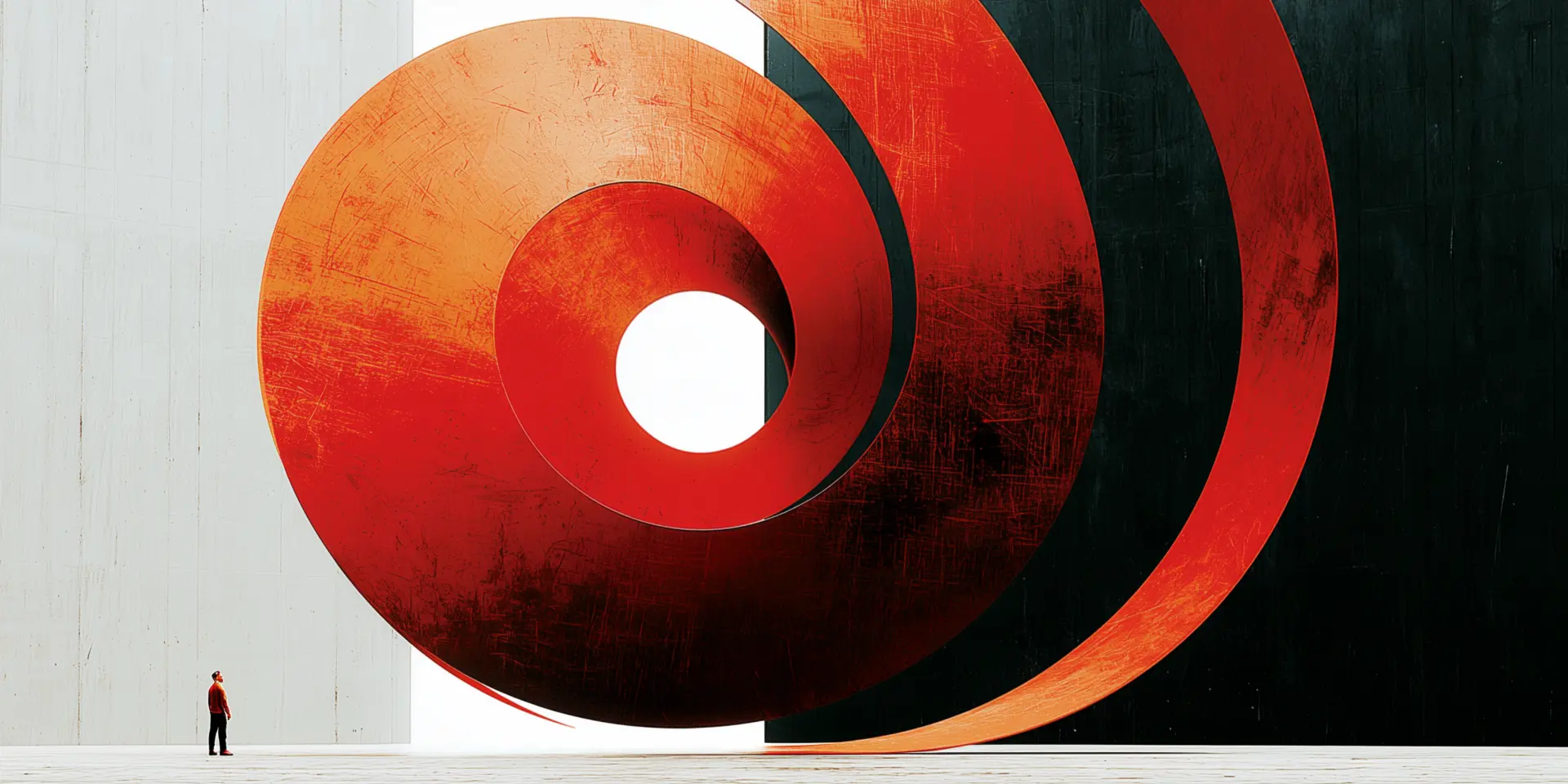
Eric Prydz’s “Opus,” and the pull of a moment that hasn’t arrived yet.
Some tracks become favorites. “Opus” became one of my reasons to create music.
I consider it a masterpiece. That is the most honest place for me to begin.
Before bringing research or explanations into this, I want to give the piece itself some room. Nine minutes. A repeating figure. An acceleration you can follow, even when you already know where it leads.
Knowing what comes next is part of what fascinates me. I know the arrival is coming. Why does the approach still matter?
That question reaches into what I want to explore as AVIRAL: the way music gives time an emotional shape.
With “Opus,” I want to spend a little of that time before the arrival. In the stretch where the music keeps moving and we keep wanting something from it.
Put on the full version. Start at the beginning. We’ll meet at 3:44—but everything on the way there belongs to the story.
Listen to Opus on Eric Prydz’s official artist channel.
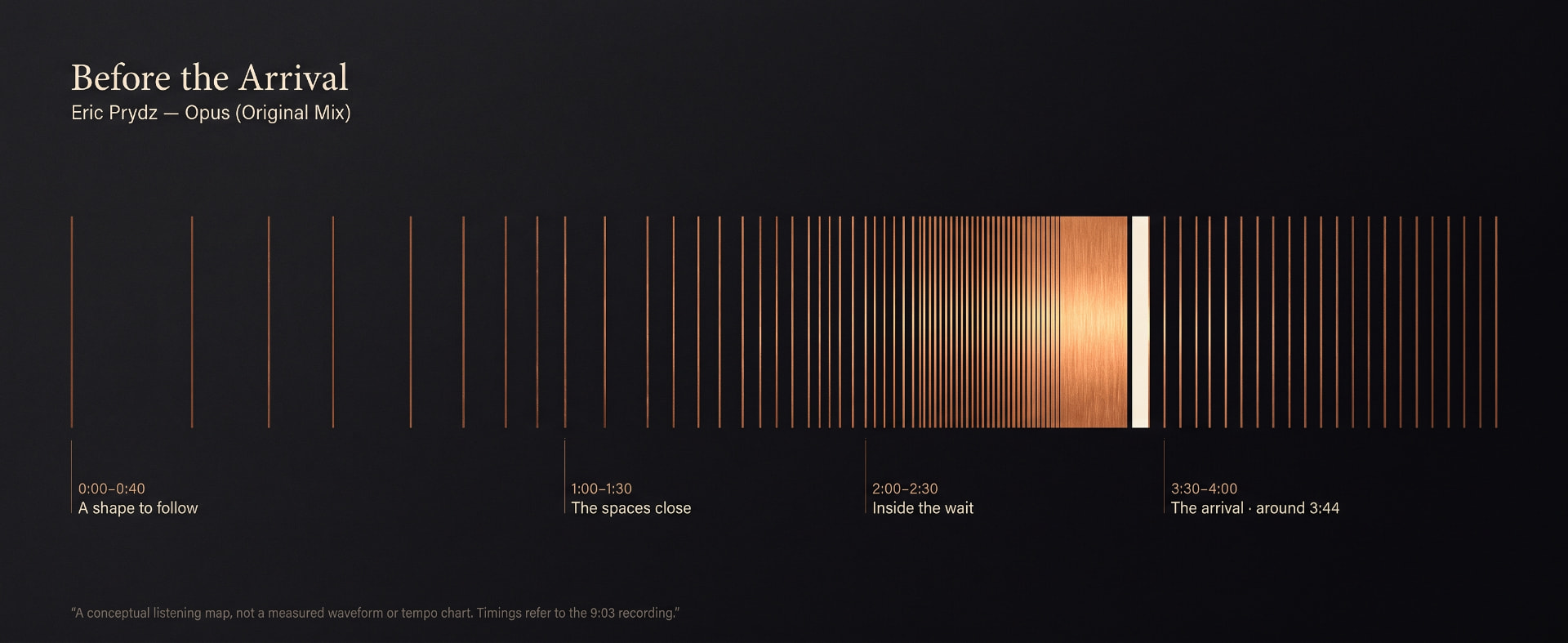
A shape to follow
A repeating musical figure gives us something to recognize. We begin to know its shape, even without knowing the names of its notes.
In “Opus,” that recognition travels through a gradual acceleration. The spaces between successive notes become shorter. A familiar figure begins to move with increasing urgency.
Start with 0:00–0:40. Follow the repeating figure and notice the space between its notes. Try tapping lightly along with its movement. This is your reference point: a pace you will carry into what follows.
Now return to 1:00–1:30. The repetitions are closer together. Follow them for a few seconds, then turn your attention toward yourself. Has your movement or concentration changed? There is no response you need to produce. Notice what happens.
Inside the wait
By 2:00–2:30, the repeated motion has become considerably faster than it was near the beginning.
Ask yourself what you are waiting for. More weight? A steady groove? A moment that feels like arrival?
Then try a different question: would you be happy for the music to remain here a little longer?
That pull between wanting to arrive and wanting to stay is what I want to explore. The repetition gives us a thread to follow while our relationship with it changes.
Meet me at 3:44
Listen continuously through 3:30–4:00. Around 3:44, the low-end weight increases strongly.
Notice when your own response begins. Before the change? At the change? Several seconds afterward?
For a small comparison, start again at 3:45. Then replay from 3:30. Does hearing the approach change the way the later passage feels?
These timings refer to the approximately 9:03 Original Mix used for this guide. Other edits may differ. For the full experience, give the piece an uninterrupted listen from the beginning.
The wait has a life of its own
Research offers a connection to this experience. In a 2011 study, Valorie Salimpoor and colleagues examined listeners experiencing intense pleasure from music. They found dopamine release and evidence that anticipation and peak pleasure involved different parts of the striatum, a region associated with reward.
The study did not examine “Opus” or establish a formula for dance music. It suggests that approaching a musical peak can have its own role in the rewarding experience. Read the research in Nature Neuroscience.
What happens for you remains yours to discover. Knowing a piece well may change the wait. Hearing it in another setting may change it again.
From wanting to listen to wanting to create
“Opus” belongs in my story because it helped make me want to create music myself.
Looking closely at it brings me back to the questions I explore as AVIRAL. What can repetition do to our attention? How can a change in pace alter a feeling? How much of a musical moment comes from the time we spend approaching it?
My work follows those questions into music as an emotional journey. Sharing the works that influenced me gives us something concrete to explore together: a pattern, a transition, a passage we can return to and experience differently.
For me, these nine minutes helped turn the desire to listen into the desire to create.
My latest release, “Cold Without You,” is out now on Big Toys Production. If you’d like to hear where my own journey is taking me, listen on Spotify, or explore my releases on Beatport.
Continue reading: How Music Creates Intimacy in the Middle of a Dancefloor.